
Essential corporate relocation guide for Fairfield OH companies
get a free quoteFairfield gives businesses access to Greater Cincinnati, established employers, industrial and office corridors, and several local and state incentive programs. A successful relocation depends on confirming zoning and occupancy requirements early, protecting business-critical systems, coordinating building access and vendors, and giving employees a clear plan for the transition.
Fairfield, Ohio is a practical Cincinnati-area location for office, manufacturing, and distribution relocations, sitting about 20 miles north of Cincinnati with access to State Route 4, Bypass 4, and I-275. Cincinnati Financial Corporation alone employs about 3,300 people in Fairfield, showing the scale of the city’s established business base. Fairfield is home to more than 1,200 businesses across insurance, manufacturing, healthcare, food production, and logistics. This corporate relocation guide for Fairfield OH covers the key planning, site, incentive, and operational details. For extra on-the-ground support, moving help in Cincinnati can bridge the gap between planning and execution.
Why is Fairfield a practical location for a business relocation?
Before you fall in love with a building, learn who lives and works in Fairfield. According to current U.S. Census Bureau estimates, Fairfield had an estimated population of 44,682 in 2025. Median household income was $77,937, per-capita income was $40,668, and 8.4% of residents were below the poverty line based on 2020–2024 data. The workforce and local economy include:
- manufacturing
- logistics
- healthcare
- retail
That mix helps if you run production, warehousing, or back-office functions under one roof. Fairfield also belongs to the larger Cincinnati–Northern Kentucky–Indiana metro. Many people already commute from Fairfield Township, Liberty Township, and Hamilton into different job centers. Others come in from Forest Park, Springdale, and northern Cincinnati neighborhoods. The U.S. Census Bureau puts Fairfield’s mean travel time to work at 23.8 minutes. That makes cross-county recruiting realistic for many employers.
The city’s employment base is also substantial for a community of Fairfield’s size. Fairfield’s 2025 employer estimates list Cincinnati Financial Corporation at about 3,300 employees, Koch Foods at 2,000, Mercy Health–Fairfield Hospital at 1,350, Fairfield City School District at 1,000, and Pacific Manufacturing at 900. That combination gives relocating companies access to an established labor market rather than an isolated suburban office location.

Fairfield’s online GIS map lets you click any parcel and see zoning and nearby features. It becomes a very practical tool once you start narrowing locations and comparing sites. At the time, local moving companies in Cincinnati Ohio can explain realistic timelines and staffing needs.
Use the GIS as a screening tool rather than final zoning approval. Fairfield states that its GIS information is informational; official zoning, land-use, and flood-zone information should be confirmed with the city’s Development Services Department before you commit to a property.
How should you use a corporate relocation guide for Fairfield OH to plan an office move?
Once Fairfield looks promising, build a timeline that fits your company’s size and risk. A move into an existing office with few alterations may require far less preparation than an industrial relocation involving construction, permits, new electrical service, structured cabling, machinery, or phased production. Instead of relying on one universal timeline, tie the schedule to the approvals and work your specific property requires.
- Early months often focus on labor analysis, site tours, and first conversations with Fairfield economic development staff.
- As you move deeper, you start lease negotiations, building design, and permit applications.
- Later phases cover interior build-out, structured cabling, furniture delivery, and actual move days.
A written office relocation checklist for Fairfield OH helps keep this from turning into chaos. Assign clear owners for finance, HR, IT, facilities, and operations. Tie key tasks to real external milestones, such as lease signing or permit approval dates. An office move checklist for Ohio businesses can also help organize permitting, technology, vendor, and reopening tasks around the people responsible for completing them.
| Relocation stage | What to confirm | Primary owner |
|---|---|---|
| Site selection | Zoning, proposed use, parking, truck access, utilities, dock and elevator limits | Facilities / legal |
| Before lease commitment | Official zoning confirmation and whether the use is permitted, subject to standards, or conditional | Legal / facilities |
| Build-out | Building, electrical, HVAC, fire, cabling, and other required permits | Facilities / contractors |
| Before occupancy | Certificate of Occupancy and required inspection | Facilities |
| IT cutover | Internet, phones, backups, access controls, servers, printers, and shared systems | IT |
| Move and reopening | Employee instructions, parking, access cards, vendor schedules, and first-day support | HR / operations |

For sites along Route 4 or South Gilmore Road, plan night or weekend moves. Traffic, ongoing road work, and nearby retail activity can make daytime moves difficult and expensive. Planning with Cincinnati moving services also clarifies crew sizes and staging plans.
If you plan to move your Fairfield office during summer, scheduling may be easier for some teams. Some employees take planned vacations. Others may have different family routines. That can give managers more room to organize the move in phases.
For example, your sales team may pack one day. Accounting can pack on another day. Operations can prepare after that. This keeps the office from becoming too crowded at once. It also helps essential work continue longer. Practical Fairfield OH office relocation tips for summer should account for planned vacations and identify which departments must remain fully operational during each phase.
Could remote work help during the move? Absolutely. Even 1 or 2 remote days can reduce pressure. Your office relocation checklist for Fairfield OH should note which teams can work remotely while key setup tasks get finished, such as:
- Furniture placement
- Internet setup
- Phone setup
- Workstation setup
If you move your Fairfield office during summer, a Friday move may help your team restart on Monday. Still, weekday moves can have benefits too. Building managers may be easier to reach. So may utility providers, internet vendors, and IT support teams. Strong Fairfield OH office relocation tips for summer should include:
- Packing dates
- Employee notices
- Desk labels
- Vendor contacts
- Parking plans
- Access cards
- First-day instructions
How do you choose the right Fairfield office, warehouse, or business park?
Site choice in Fairfield usually starts with a few well-known corridors. Seward Road and nearby streets include established industrial properties and access to Route 4. Buildings in industrial areas may provide features such as:
- high clear heights
- multiple dock doors
- flexible trailer parking
Do not assume those features apply to every property. Confirm clear height, loading positions, trailer circulation, floor loads, electrical capacity, fire protection, and available parking for the exact building you are considering. Record those site-specific limits in your office relocation checklist for Fairfield OH before crews and equipment are scheduled.
Fairfield’s industrial zoning includes M-1 Industrial Park and M-2 General Industrial. M-2 is intended for general industrial development, but that does not mean every industrial activity is automatically allowed. Fairfield’s zoning code separates principally permitted uses, uses permitted with standards, and conditional uses. Confirm your exact operation with Development Services before signing a lease, especially if you run heavy manufacturing, outdoor storage, specialized processing, or another use with additional requirements.
Office-focused companies often look at South Gilmore Road, Mack Road, and the Route 4 commercial corridor. There you find mid-rise offices near hotels, restaurants, and retail centers. During tours, watch how trucks enter, turn, and queue. Ask where snow piles in winter. Pay attention to neighbors, shared drives, and possible noise complaints as well. Local teams like movers in Fairfield Ohio can share which parks work best for your industry.
An office move also gives you a rare chance to rethink the space. If you move your Fairfield office during summer, use the planning window to decide what the team actually uses and what can stay behind. What sits untouched? What slows people down? Old chairs can increase moving costs. So can extra desks, damaged cabinets, unused cubicles, and outdated equipment. Hybrid work has also changed many offices. Some teams need fewer fixed desks. Others need better meeting rooms, private call spaces, cleaner storage, or better client-facing areas.
Label rooms, desks, departments, and equipment before moving day, and use floor plans when possible. This helps movers place everything correctly the first time. It also helps employees feel less confused when they arrive. Useful Fairfield OH office relocation tips for summer also include checking cooling and airflow in the new workspace before employees return.
The planning can also be different for businesses. That is why the topic of commercial vs residential movers in Cincinnati matters when office equipment, access rules, and downtime are involved.
What relocation incentives are available in Fairfield?
After shortlisting sites, most companies ask the same question: can incentives help? Fairfield does offer several tools that matter for relocation budgets. The city’s Community Reinvestment Area program provides real-property tax incentives for qualifying businesses that expand or locate in defined areas and agree to significant investment in new construction or rehabilitation and new employment creation.

Fairfield also runs a Job Creation Incentive grant that links support to new jobs. The city says the program is considered for industrial or office projects that meet minimum jobs, payroll, and investment thresholds, generally when a CRA property-tax incentive is not available. Ohio’s Job Creation Tax Credit is another performance-based option tied to newly created payroll; approval from the Ohio Tax Credit Authority is required before hiring begins.
At the state level, JobsOhio offers several funding programs. The JobsOhio Relocation Incentive currently provides $15,000 per qualifying new hire who relocates from outside Ohio, establishes permanent Ohio residency, and fills an eligible full-time STEM or technical occupation. The hire must be above the employer’s established three-year baseline for qualifying out-of-state hires. Eligible employers must operate in a JobsOhio targeted industry, and the program is capped at $225,000, or 15 qualifying hires, per company while funds remain available.
Smaller commercial businesses may have another option. Fairfield’s Commercial Revitalization Grant provides $5,000 to $25,000 for qualifying exterior improvements, with at least a 20% grantee match. Eligibility is narrower: the property must be used commercially, and the applicant generally must be a for-profit small business with 25 or fewer employees. For large office moves, Cincinnati office movers can phase relocations so departments keep running.
What legal, zoning, and occupancy requirements should you check?
Legal housekeeping rarely feels exciting, yet it can delay everything if you ignore it. If your company is organized outside Ohio and will conduct business in the state, determine whether it must register as a foreign entity with the Ohio Secretary of State. A foreign for-profit corporation application and a foreign limited liability company registration currently each carry a $99 filing fee. Conversion into an Ohio entity is a separate legal process and should not be treated as interchangeable with ordinary foreign registration. Companies relocating from outside Ohio also need to coordinate registration, property access, employee communication, vendors, and business continuity when planning how to move your office across state lines.
Once you resolve entity status, shift attention to local permissions. Fairfield’s Building and Zoning Division handles building permits, contractor registration, site reviews, and inspections. Fairfield requires all businesses that are new to the city or new to a property to receive a Certificate of Occupancy. The process includes a permit application and inspection, and a new building or change of use cannot be occupied until the city issues the certificate. Add the required permits, inspections, and occupancy approval to your office relocation checklist for Fairfield OH so the opening date is tied to completed approvals.
The city code also addresses issues like unsafe structures, relocation of structures, and fee schedules. You should review the official zoning map and confirm that your use fits the district. Sites along Seward Road, for example, may fall within industrial zoning, but the exact parcel and proposed activity should be confirmed before lease execution. Manufacturing, warehousing, offices, outdoor storage, processing, and specialized operations may be treated differently under the code. Industries like healthcare, food processing, or logistics may also require approvals from state boards, fire officials, health departments, or other agencies. While lawyers handle forms, packing service in Cincinnati can handle files, samples, and office contents.
How can a corporate relocation guide for Fairfield OH help protect operations during the physical move?
Logistics planning in Fairfield should start with a map, not just a calendar. Trucks serving Seward Road, Symmes Road, and Route 4 often feed into I-275 and Bypass 4. From there they reach I-75 and the wider region. Check Fairfield’s current infrastructure projects shortly before your move rather than assuming normal road conditions.
In 2026, Fairfield’s resurfacing program includes Symmes Road from Pleasant Avenue to Route 4, plus Hicks Boulevard, Factory Drive, Veteran Drive, Industry Drive, and other streets around commercial and industrial areas. The city warns that temporary delays and closures can occur while crews work. The South Gilmore Road project between Resor Road and Route 4 also has a stated 2026 completion date and includes lane changes and pedestrian improvements. Those details matter when you schedule heavy deliveries, cranes, dock appointments, and overnight work. Among the most practical Fairfield OH office relocation tips for summer is to recheck road work and access conditions immediately before move day rather than relying on an earlier route plan.
Inside the building, verify dock heights, floor loads, door widths, turning clearance, and elevator capacities well before move trucks appear. State and local route information can also help you identify unsuitable turns, construction areas, or restricted routes. For multi-site moves, long distance moving companies in Cincinnati coordinate deliveries across Fairfield and other hubs.
Weather adds another layer. Winter moves require backup plans for snow and ice, while summer brings heat, humidity, and thunderstorms. If you move your Fairfield office during summer, an early morning start can help your team avoid the hottest part of the day. OSHA recommends water, rest, cooler or shaded recovery areas, and schedule adjustments when workers face hazardous heat. Electronics also need extra care. Computers and servers should not sit inside hot trucks for long.
Detailed planning inside the facility can prevent nasty surprises when relocating a business to Fairfield Ohio. Manufacturing lines, laboratory equipment, and cold storage units rarely move in a single sweep. Many companies schedule phased shutdowns so some lines keep running while others move. That structure requires close coordination with riggers, electricians, and IT teams. Ask them to confirm power requirements, cable paths, and floor penetrations in the new Fairfield site.
Tight dock layouts appear in some parks, especially where multiple tenants share drives. You may need strict dock appointments to avoid blocked fire lanes or conflicts with neighboring tenants. Use clear labels, zone maps, and simple color codes on every pallet and crate. Crews should see at a glance which items belong on which floor or aisle. Good labeling shortens unload times and reduces how long trucks sit on local streets. It also limits internal confusion when staff arrive and start unpacking equipment and files.
Relocation should not risk your ability to answer calls, ship orders, or process data.
- Start with an office relocation checklist of functions that absolutely cannot go dark. That list usually includes call centers, ordering systems, customer support, financial systems, and key production lines.
- Design a move sequence that protects those areas first. Many companies run both locations side by side for a short period. That overlap allows you to test new connections while the old site still handles traffic.
- Internet and telecom planning plays a major role here. You may need new fiber runs, different circuits, and fresh IP ranges at the Fairfield address. Schedule those changes well ahead of move day and test them under load.
- Treat servers and storage arrays as special cargo with documented chain-of-custody steps. Lock racks, seal boxes, and track serial numbers during transport.
- After equipment lands in Fairfield, run detailed acceptance tests. Only retire the old site once systems show stable performance.
Even simple steps, like ordering packing supplies in Cincinnati early, help teams keep hardware organized when relocating a business to Fairfield Ohio.
A summer office relocation in Fairfield OH should include a detailed technology plan. Back up files before moving computers. Label cables, docks, monitors, phones, printers, routers, and other shared equipment by person, department, or room. Data security matters too. Track laptops. Lock records. Protect client files. Limit access to sensitive documents during the move. Moving computers during office relocation is not just a packing task. It is a business continuity issue. Those same controls are central to how to ensure a tech-safe move when computers, network equipment, and sensitive business data have to change locations together.
Before reopening, test internet, phones, Wi-Fi, and printers. Then check security cameras, card access, shared drives, business-critical applications, and any equipment that depends on network connectivity. NIST contingency guidance emphasizes identifying critical systems, establishing recovery strategies, and testing recovery arrangements rather than assuming they will work when needed.
Summer is also a good time to test the building before everyone settles in. Air conditioning matters during hot Ohio weather. Walk through every room and check airflow, lighting, outlets, restrooms, break areas, entrances, conference rooms, and security systems before employees return.
How should you support employees, vendors, and customers during the move?
Corporate moves fail or succeed partly on how employees feel about the new location. If you move your Fairfield office during summer, communicate vacation coverage, remote-work expectations, parking, and the first in-office date early. Fairfield gives you several concrete points to share when you announce the plan. Current U.S. Census Bureau data for 2020–2024 shows:
- 63.2% of occupied housing units are owner-occupied.
- The median value of owner-occupied housing is $234,500, with median monthly owner costs of $1,523 for households with a mortgage.
- Median gross rent is $1,242.

Commute times also support a regional talent strategy. Fairfield’s mean commute time is 23.8 minutes. Many workers already travel between Fairfield and communities such as West Chester, Liberty Township, Hamilton, Forest Park, and northern Cincinnati. Families will ask about schools, parks, and daily routines. Fairfield maintains parks, trails, and community facilities, while Route 4 and nearby centers offer shopping and services. Fairfield OH office relocation tips for summer should also cover employee arrival times, vacation coverage, and any temporary remote-work arrangements during cutover. Share this information in simple maps or one-page guides during internal announcements. When teams are moving from Hamilton to Fairfield, share clear guides on neighborhoods and commutes.
How should you coordinate movers, vendors, and building access?
In Fairfield, experience with local parks and corridors really matters. Look for commercial movers who already serve Fairfield Commerce Park, Union Centre Logistics Park, or other Seward Road complexes. Those teams know dock rules, truck routes, and common bottlenecks.

Bring in local electricians, low-voltage contractors, and cleaning services early as well. They understand Fairfield’s inspection standards and common punch-list items. When you send requests for proposals, require site walks at the current and future locations. Ask vendors to highlight tight corners, awkward stairwells, freight elevator limits, and likely choke points. Fairfield OH office relocation tips for summer should also account for HVAC readiness, hot loading areas, and vendor availability before the final schedule is locked. Then write those findings into your scopes, schedules, and pricing.
Building-management requirements should be documented too. If you move your Fairfield office during summer, confirm loading-dock reservations, freight-elevator hours, certificate-of-insurance requirements, parking restrictions, access-card procedures, alarm contacts, after-hours rules, and the exact location where trucks can stage. If multiple vendors are working at once, assign one person to control the master schedule so an electrician, cabling contractor, furniture installer, and moving crew do not all need the same space at the same time.
How should you communicate the new Fairfield location?
Good communication makes your Fairfield move feel organized instead of chaotic. Inside the company, share a simple timeline with big milestones. Include dates for:
- lease signing
- construction start
- first move
- final cutover
Use email updates, town halls, and a central intranet page with all key information. Show maps that highlight the new address, parking areas, and access from I-275 and Route 4. HR should explain the benefits of relocating a business to Fairfield Ohio, commuting tips, and any flexibility around remote work. Externally, update your website and business listings with the new Fairfield location and service hours.Tell major customers, partners, and carriers about the move well in advance. Give them alternate contacts during cutover weeks. After the move, invite staff and customers to share feedback. You might spot issues with signage, loading areas, or reception that you missed on paper.
Your Google Business Profile should also show the new office location. Google allows businesses to edit their address through the existing profile, although significant changes can be reviewed and may require verification. Update the official address carefully and make sure the map pin reflects the actual business location.
Vendors also need time to update their records. Routes, billing addresses, and delivery notes should all match the new location. Mail forwarding matters too. USPS recommends telling regular mail senders about the new address and move date at least two weeks before moving. Businesses with an Employer Identification Number can use IRS Form 8822-B to report a new business mailing address or business location.
- Checks
- Legal notices
- Client documents
- Supplier invoices
Also update invoices, email signatures, supplier files, delivery instructions, social profiles, online directories, insurance records, bank records where applicable, and any permits or registrations tied to the physical location. Your office relocation checklist for Fairfield OH should assign an owner to each address change so customer-facing and regulatory records are not missed. Keep phones forwarded during the transition, move nonessential equipment first, and transfer critical workstations only when the new site is ready to support them.
Use this Fairfield guide to plan a confident relocation
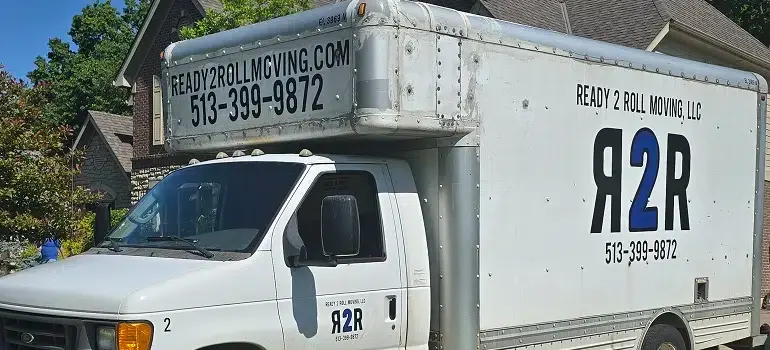
Ready 2 Roll Moving helps Fairfield businesses turn relocation plans into a coordinated move with clear communication, careful handling, and local Cincinnati-area experience. Use this corporate relocation guide for Fairfield OH to confirm the property and zoning first, then settle permits and incentives, map truck access, protect critical IT and operations, and coordinate employees and vendors around a clear cutover schedule. When your timeline, access requirements, and downtime limits are taking shape, contact us to build a commercial moving plan around how your business actually operates and keep the move rolling without losing sight of the work that needs to continue.
Frequently asked questions and answers
Ask about cargo or contents coverage, general liability, auto liability, and workers’ compensation. Commercial buildings may also require a Certificate of Insurance before movers can enter. Confirm coverage limits and exclusions in writing, especially for expensive equipment, servers, artwork, or specialized machinery.
Many commercial movers can disassemble desks, conference tables, shelving, cubicles, and other office furniture when arranged in advance. Identify anything requiring manufacturer-specific tools, electrical work, or specialist installation before moving day so those items can be assigned to the right contractor.
Decide before packing begins. Usable furniture can be sold, donated, recycled, transferred to another location, or placed in storage. Damaged or obsolete items may require disposal. Removing unwanted furniture early reduces the volume being moved and keeps the new office from becoming cluttered immediately.
Yes. Record high-value equipment, furniture, electronics, and other important assets before they leave the old location. Photos, asset numbers, serial numbers, and destination labels make it easier to confirm that items arrived and to document a claim if something is damaged or missing.
Tell the moving company and building managers as soon as possible. Changes in date, crew size, inventory, elevator reservations, packing requirements, or access hours can affect availability and price. Ask for any revised scope and charges in writing before the new plan is confirmed.
Review the lease for restoration and surrender requirements. Remove remaining furniture and waste, repair any required damage, return keys and access cards, document the condition with photos, and obtain written confirmation of the handover when possible. This can help prevent disputes over repairs or deposits.
